
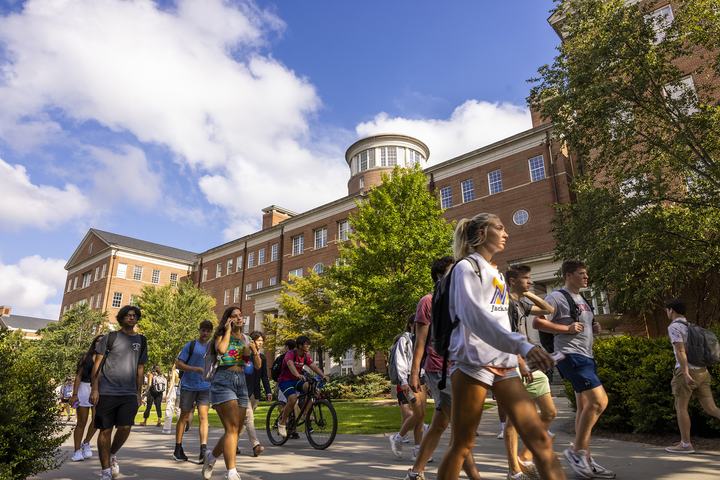
The Ivy League of the 2020s isn’t your dad’s Ivy League, and it certainly isn’t your granddad’s.
Take it from a Harvard law student with SEC roots: the Ivy League is dead.
The Ivies of the 1920s were essentially social clubs: places where the wealthy sent their sons to
forge connections that kept them wealthy. The degree was little more than a brand—proof you
were a “Harvard man,” “Yale man,” or “Princeton man”—and far more about networking than
learning. It was a signal for networking with one’s fellow elites. But it didn’t mean that you
learned a damn thing in college. If you wanted to do that, you’d have enrolled at the state school
a few towns over.
Rutgers produced graduates with hard skills. Princeton graduates specialized in the arts of
etiquette and fine dining. Look no further than John F. Kennedy—in his successful admissions
letter to Harvard—emphasizing his desire “to be a Harvard man” above all else. Academics were an afterthought.
Times have changed. At some point in the last century, the Ivies abandoned their commitment to the socialization of the elite. Rather than perpetuating the American aristocracy, their role shifted to creating a new aristocracy. DEI initiatives and affirmative action, of course, were designed for this exact purpose. By cutting off access to the pipeline for the existing elite’s children—and providing one for the first time to teenagers who would’ve been passed over in previous generations—the good ol’ boys club came to an end.
To make up for their loss as a creator of the “social club” signal, the Ivies rebranded into an
academic powerhouse. No longer would they be the place where learning became an
afterthought; the Ivies would now serve as the pinnacle of American intellectualism. No public
school would be able to challenge the academic training that an Ivy League school could provide. And in turn, the “signal” of the Ivy League degree could be saved after all. Harvard would still churn out “the elite” at the same rates. The only difference is that the group would now be defined by the value placed on their education rather than their socialization.
In a way, the Ivies tried to swap brands with the public schools of the 1920s, while maintaining
their own traditions and alumni networks that would allow such a switcheroo.
If they could just retain that signal to the outside world that Harvard men were of a certain class
and status—and that Harvard men would be smarter than any other by virtue of their intellectual
training in Cambridge—then the scheme would have proven successful.
But that scheme has failed. Without taking too much of a detour, let me provide a quick
biographical explanation. I grew up in a middle-class family in the South. Not a member of “the
elite.” I went to an emblematic Southern state school (a proud member of the Southeastern
Conference), and I’m now a student at Harvard Law School. The day I showed up at Cambridge, I thought I’d truly made it. I would be ushered into the finishing school of the elite. But I found quite the opposite.
First, the socialization. I knew the Ivies had lost their status as social clubs for the elite. But I still
expected to find a thriving campus culture that reflected the idyllic American college experience
and helped to socialize its graduates and prepare them for the new world beyond the four corners of Cambridge.
I went to a party in my first week on campus and had to hold in laughter at what I’d stumbled
upon. Here were fifty kids from various elite undergrads—many of them Ivies—and not a single
one appeared to know how to behave around other human beings.
And it wasn’t just the parties. A walk down the halls of the university buildings revealed the events planned for the various schools and communities that semester: a debate on animal cruelty (that is, whether eating meat is immoral), a discussion of Talmudic law and its implications for American democracy, and a reading group on Taylor Swift and the feminism of her lyrics.
Defeated, I thought I’d take a detour outdoors since this was a particularly sunny August day.
Based on my SEC days, I expected to find men and women lying out in the sun, throwing the
football or frisbee. I did not. And the few scragglers who were showing a bit of skin and lying
out in the sun probably should not have been, for the good of those around them.
This was simply not the college experience. Most undergrads I came across were miserable.
Social life on campus funneled through academics; no breathing room remained for the student
who wanted to suck the marrow out of life and appreciate the Harvard experience. If your GPA
slipped for one semester, or if you offended those with the power to excommunicate from the
campus social life—then your life was basically ruined.
But the biggest surprise came on the academic front. Conversations in first-year seminars
resembled those I’d had with my “uneducated” peers back in the South. Professors had their
moments of brilliance, but just as soon as one began down a path of enlightenment, some midwit interrupted the discussion to ask their own derailing question about the dangers of humanizing the oppressors in the law. Or complaining that the professor was too flippant in discussing the issues of criminal law on the day’s calendar. The professor must first issue a trigger warning for the sensitivity of the legal topics discussed.
The faculty seemed demoralized. They didn’t push back against the students' grandstanding.
Experts in their field—professors cited by the Supreme Court with regularity—had been
neutered by the complaints of one single student. One renowned professor even opened class by apologizing for using the word “autistic” to describe a jurisprudential philosophy the week
before—deemed a bridge too far by other students.
The shocking part of this is that my experience at a public school in the South could not have
been more opposite. Because the campus was split roughly 50/50 on ideology, students had to get
along with each other. Politics could be discussed over drinks. Or better yet, at a football tailgate. Students drank together, pulled pranks on friends in the dorm together, went to church together, and watched sports together.
SEC campuses have stepped up as the true heirs to those 1920s Ivies—minus the snobbery. Sure, it might not stamp its graduates with the mark of the elite, but it trains them to exist and interact in the real world. And if you’re looking for the “college experience” that will socialize and give you a set of shared experiences with all of your red-blooded-American peers, then you’re much better off heading South than to Cambridge.
All of this is to say: I remain grateful for my SEC public education. And if I had children going
into the college admissions process right now, I’d lead them to Ole Miss over Cornell. Alabama
over Harvard. People come together. Soft and hard skills alike develop. Professors are given
permission to cut their filter. Football is played. Drinks are consumed. Prayers are prayed. In
short, life unfolds on an SEC campus.
The Ivy League haters are right. The schools have lost their way. A cult of fake perfection and
censorship has bulldozed the authentic human grit we used to cherish. Harvard used to be special because it provided the quintessential college experience. No greater honor existed than being labeled a “Harvard man.” But that’s been lost. As for me, I’ll take the label “common man.”
instead.
No comments yet. Be the first.