
Cobalt Emperor is an Economics student at a major American university.
In the Digital Age, tech sector growth is driving the American economy forward. While the stock market performance over the past year seems at first glance to be robust, but subtract the Magnificent 7 (Amazon, Nvidia, Apple, Alphabet, Meta, Microsoft, and Tesla) and the S&P’s performance rapidly shrinks. According to Harvard economist Jason Furman, AI investments accounted for 92% of America’s GDP growth in the first half of 2025. As manufacturing and service firms continue to stagnate, the S&P 500 is carried by tech stocks week after week. These companies have the most money, the most coveted jobs, and the largest investments. For better or for worse, American economic dominance is reliant on Big Tech.
As such, the stability of this sector is vital for the future of American power, but it comes at a cost. The handful of firms carrying the S&P 500 week after week are going to need huge capital investments for data centers and offices. Massive research and development costs are needed to keep up with China in the AI race. Increasing numbers of workers from engineering and computer science backgrounds will need to be hired. For now, it appears that supply is mostly catching up to demand. High stock prices and eager investors mean that companies can undertake large and expensive projects. Over one hundred thousand CS students graduate American colleges every year, competing with H-1B immigrants in an increasingly saturated labor market. These developments favor the firms.
However, electricity is the one resource not meeting the demand and no amount of financing, human capital, or entrepreneurial skill can substitute for raw power. American energy consumption is straining the grid. The modern tech economy runs on three energy-hungry pillars: data centers, chip fabrication, and battery plants.
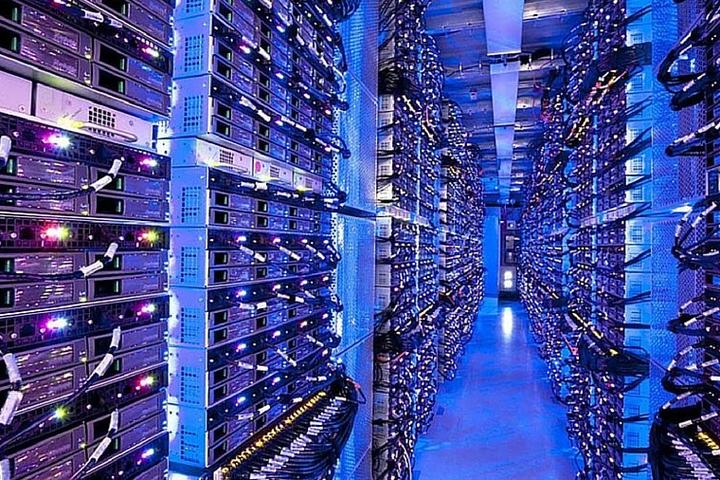
Data centers are by far the fastest-growing energy consumer. These massive complexes of computers need 24/7 continuous and reliable energy to power AI models and the many servers needed to power networks. Data centers already consume 4.4% of all US electricity, and projections suggest this will double every two to three years to compose 15% of the grid by the end of this decade. Training a single LLM can take the equivalent to the electric demands of hundreds of households, not accounting for the many tweaks and uses when released to the public. Data centers can’t easily optimize data usage. Silicon computer chip manufacturing is arguably an even more essential sector of the tech industry. These fabrication plants, commonly called fabs, need continuous power for cleanrooms, vacuum pumps, extremely precise lasers, and chemical processing. A single large fab (like TSMC’s or Intel’s new U.S. plants) can consume 100–200 MW of power, roughly equivalent to a small city. With sweeping new tariffs announced in the past year, these plants are increasingly planning to “reshore” to avoid long-term costs. Thirdly, electric vehicle and battery manufacturing have power requirements comparable to more traditional factories and form part of the broader trend of electrification of all kinds of transport including cars, trucks, and rail. These plants have the added cost that every product they make will suck up additional power throughout their lifetime. If Washington wants to continue the reindustrialization of America like it did in the CHIPS Act of 2022, it requires the same urgency for energy security. America might still be dominant in skill and talent (despite what some in the Ohio GOP might say), but neither can replace energy. Whoever has access to the cheapest power will dominate the 21st century, regardless of other resources. There is no such thing as a rich country with low electricity usage.
Unfortunately, America’s energy policy has remained lethargic. Delays, costs of permitting, climate alarmism, and general incompetence hold us back. Legal paperwork can forestall critical projects by years. Activists can convince bureaucrats to cancel plans that have been in motion for decades with the stroke of a ballpoint. While America spills ink, China builds. Beijing approves new nuclear, coal, and renewable mega projects at a rate that is unthinkable in North America or Europe. The leaders of China understand the importance of electricity as the foundation for the AI tech race.
American chip fabs and data centers have been exploding across the entire country, but the growth is clustered in certain regions. Northern Virginia, with its proximity to Washington and major east coast hubs, is now home to over 600 data centers, many located in “Data Center Alley” in Loudoun County where most of the world’s internet traffic passes through. Recently, utility costs exploded as a result of the surge in new demand. Dominion Energy, the main provider in the Commonwealth, warns of shortages by 2028. Supply from Virginia’s rich coal deposits could help offset these issues. While coal isn’t glamorous, modern clean plants and new coal-to-gasification technologies provide the baseload power that these plants need with surprisingly low pollution. While not as rich in liquid gold as other states, Virginia also has essentially untapped shale deposits in the Marcellus formation. The growth of a new shale sector combined with a revitalization of Appalachia’s slowly dying coal industry would cement Virginia’s data dominance.
In America’s Southwest, Arizona dominates chip fabs. Phoenix is now one of the main centers of semiconductor fabrication, where Intel has a long-established presence, and TSMC recently announced an investment that could hit $65 Billion. With each new project comes new strains on Arizona’s infrastructure. The Palo Verde nuclear plant has plans for expansion, but it’s politically stalled. And if Arizona’s electricity is approaching desperation, its water supply is already there. An abundance of water is needed for cooling plants, and disputes with neighboring states over the flow of the Colorado River threaten Arizona’s already-limited supply.
Michigan — historically one of America’s most dominant manufacturing states — saw a mini-revival with battery production and electric vehicles. But while its factories have modernized, its grid has not. Michigan loses because of energy vulnerability. Frequent blackouts plague the state. According to the Energy Information Agency, Michigan’s energy situation is one of the least reliable in the US. But there is currently no plan to update the outdated energy infrastructure.
These issues are urgent. Across the country there is a massive grid investment backlog: over 2,000 gigawatts of generation waiting for connection. Do we want to live in a country where we have to slow down the growth of our most dynamic and strategically important sector? The question is not one of material, but of motivation. From the mountains to the desert to the Midwest, the story is the same. The future of industrial dominance relies on electricity. The country that builds it the fastest will shape the century.
No comments yet. Be the first.