
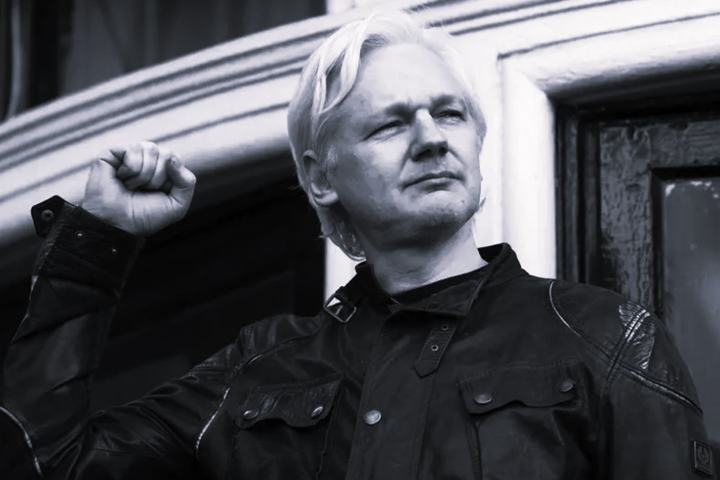
On June 24, Assange was freed from captivity in Belmarsh maximum security prison. Before his release, he was the highest-profile detainee worldwide facing a U.S. extradition request. He had spent seven years in the Ecuadorean embassy in London before being held captive in the British prison for five additional years. His release signals a new age of informational freedom in the global political landscape and a growing distaste for the lies of the American government.Julian Assange is infamously known for being the founder of WikiLeaks, a depository of leaked private information, ranging from domestic security items to exposures of American war crimes. Some of his notable work has included leaking DNC emails, exposing the U.S. State Department’s corruption, and revealing war crimes in the Middle East. These revelations have largely weakened the “deep state” in America but have also damaged some right-wing undercurrents in the Western world.Consider the effects of WikiLeaks on the dissident right in the United Kingdom. The British National Party was a right-wing authoritarian party in the UK that aimed to put ethnic Britons first through economic and immigration policy. However, in 2008, Assange’s leak of the BNP membership registry exposed twelve thousand BNP members' names, addresses, and personal information, effectively ending the party.It is important to delineate that Assange is neither right nor left-leaning but rather takes an anti-establishment position regarding his political activism. Assange is by no means a right-wing ideologue or a member of the dissident right. His dedication to truth and transparency, however, detached from a grounded system of morality, motivated him to stand up to governments and institutions that had lied to and failed their people.That being said, much of the information on WikiLeaks proved extremely beneficial for positive change in America. A significant portion of Assange’s leaks have been used as evidence to support America First foreign policy and struck blows to the globalist status quo. The Collateral Murder leak and the Iraq War Logs exposed the depravity of the Iraq War and the triviality of the American presence in Iraq. Further support for the America First position on foreign policy came from the Afghan War Diaries leak, which detailed civilian casualties and the involvement of Pakistan and Iran. Another leak demonstrated the inexcusable dumping of American resources towards Guantanamo Bay, which called into question the current government's ability to fairly recognize threats to national security and deliver proportionate responses to such threats.His strategy of leaking secrets was specifically targeted at striking fear into the agents of Western governments that have consistently lied to their people. In 2006, he wrote in his blog, “The more secretive or unjust an organization is, the more leaks induce fear and paranoia in the leadership and planning coterie. This must result in minimization of efficient internal communications mechanisms (an increase in cognitive ‘secrecy tax’) and consequent system-wide cognitive decline resulting in decreased ability to hold onto power as the environment demands adaptation.” By requiring these corrupt organizations to increase secrecy to prevent leaks, their efficiency and power are limited. Given that these corrupt agencies and institutions are completely opposed to the dissident right in America, Assange’s WikiLeaks has benefited the America First movement.His exposure of American corruption has also made it explicitly clear which mainstream politicians are incompatible with an America First future. First to protest against Assange were collusion-prone Democratic figures, such as Nancy Pelosi and Adam Schiff, who immediately voiced opposition to Assange's exposure of corruption, especially concerning the DNC email leak. This leak proved to be a timely assist to Trump's 2016 campaign, where the topic of Clinton's emails proved to be an effective weapon for Trump during the debates and in national media. Clinton, of course, joined her colleagues in opposition to Assange's work.Similarly, many intelligence agency figures also stepped up to denounce Assange. James Clapper, the former director of National Intelligence, and John Brennan, former director of the CIA, were among the most vocal supporters of Assange’s extradition on the grounds of “national security concerns.” Ironically, the nature of the leaks themselves proved to show that the current intelligence apparatus was deeply flawed and is actually the cause of many problems that threaten our national security.Unfortunately, there was strong conservative opposition to Assange's actions from members of Trump's former administration. Mike Pompeo and Jeff Sessions also echoed “national security” concerns. Additional Republican politicians spoke out, including Marco Rubio (rumored to be a potential vice president pick for the Trump campaign) and Lindsey Graham, an ardent supporter of American interventionism. All of these powerful voices, in their blind and immediate calls to cast Assange as a danger to American security, have shown that they would rather side with the lies told by the intelligence agencies, the military-industrial complex, and the Democratic Party than with the man who revealed the truth to the American people.Thanks to Assange, America can see the depths of corruption involved in the intelligence apparatus, the wastefulness and failures of global intervention, and the blind eye that the state is willing to turn on torture and wrongful imprisonment. His courage to pull back the curtains on the American government offers bold inspiration for right-wing actors and adds to the growing America First momentum.
General · Opinion ·
Assange Released: A Blow to Government Secrecy
Julian Assange is infamously known for being the founder of WikiLeaks
No comments yet. Be the first.